


10 Best Materials for Outdoor Advertising Signs (Updated 2026 Guide)
March 13, 2026
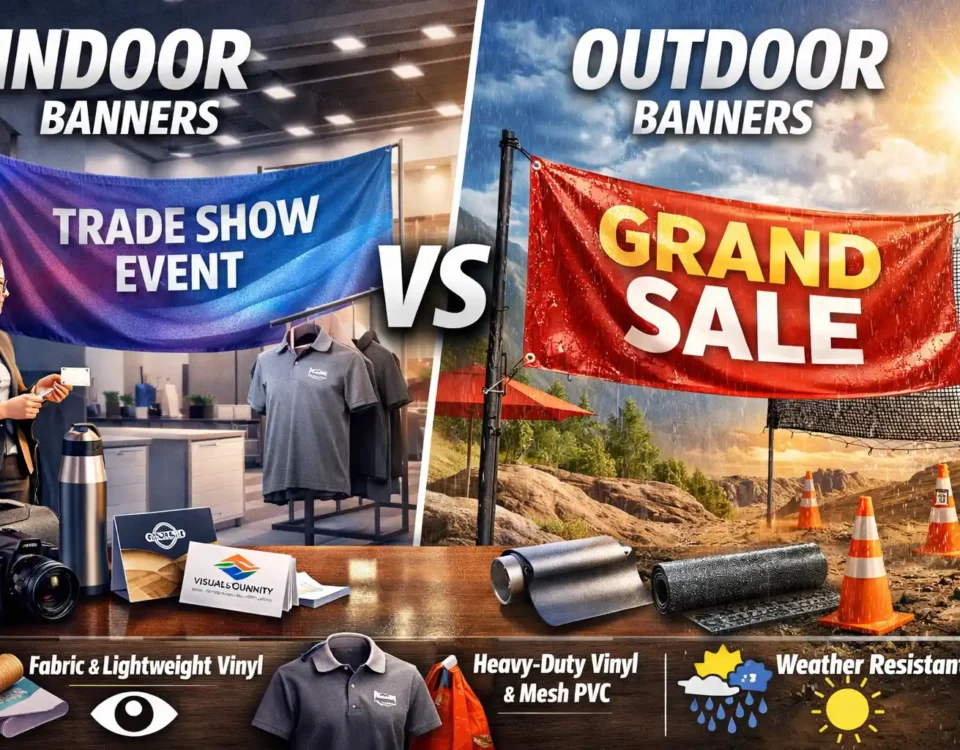
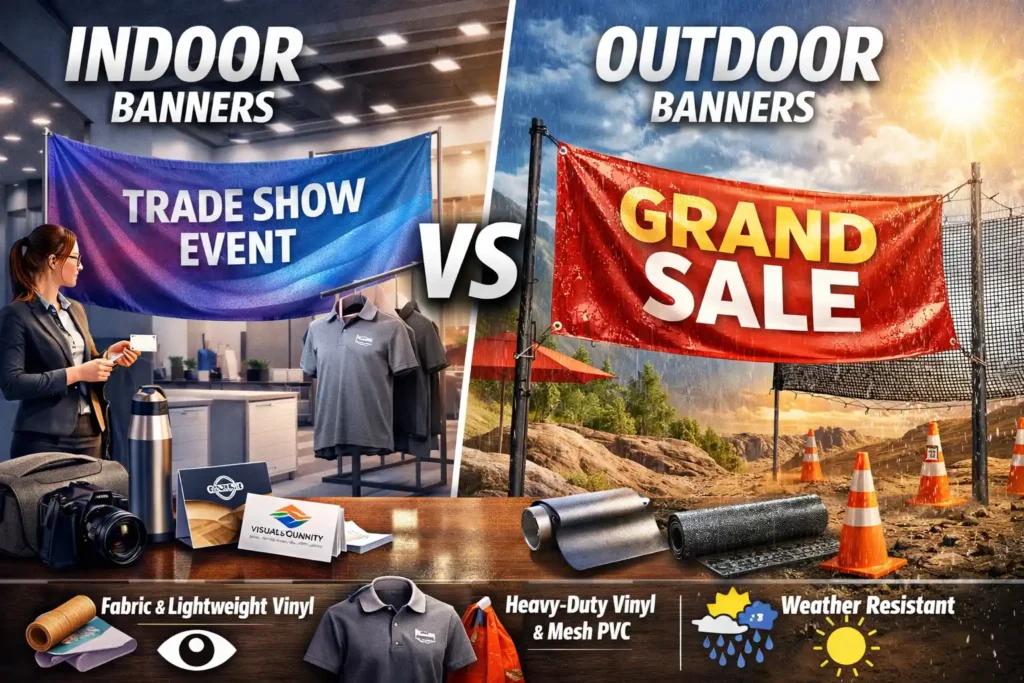
Indoor vs Outdoor Banners: Material Differences Explained (Updated for 2026)
March 13, 2026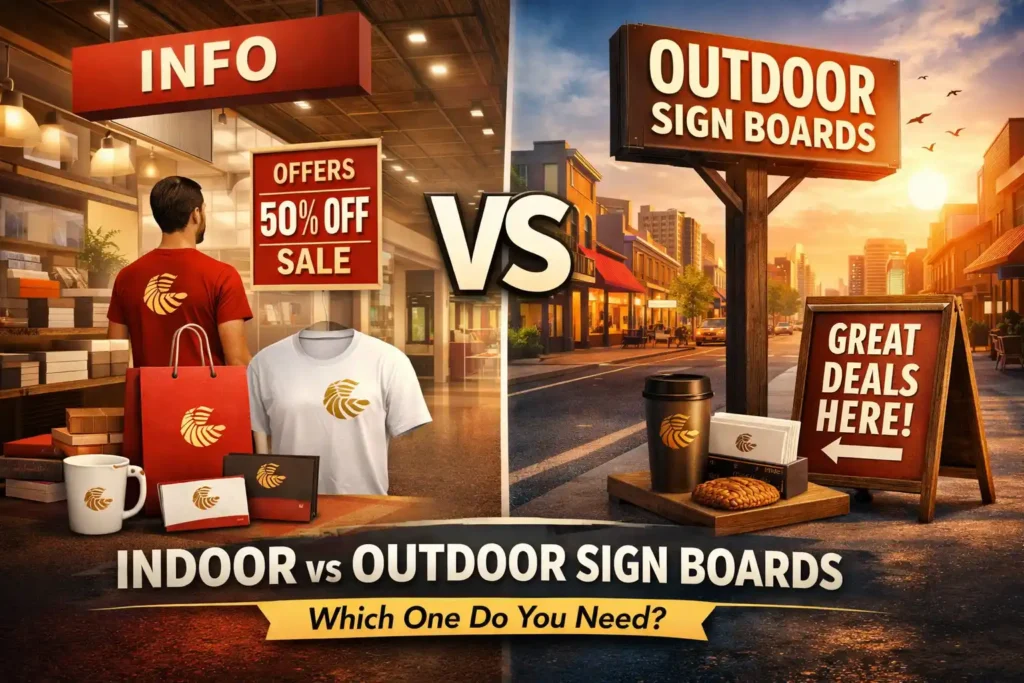
Summery
• Indoor and outdoor sign boards serve different purposes based on visibility, durability, and location.
• Outdoor signs must withstand weather and long-term exposure.
• Indoor signs focus on wayfinding, branding, and controlled lighting.
• Use the right sign board for your business goal: awareness vs navigation.
• Complement signage with business collateral like cards, apparel, and branded drinkware for full brand impact.
What Are Indoor and Outdoor Sign Boards?
Indoor sign boards are signs placed inside buildings (shops, lobbies, hallways) to direct, inform, or influence visitors.
Outdoor sign boards are designed to be outside (storefronts, roadside displays), built to withstand weather and environmental exposure, sun, rain, wind, heat, and dust.
In short, indoor signage prioritizes clarity and design in controlled spaces, while outdoor signage prioritizes durability and high visibility in all conditions.
Why Sign Board Choice Matters for Your Business?
Choosing the wrong sign board can weaken your message. A flimsy indoor sign used outdoors may fade or warp in sunlight. A heavy outdoor board inside might look bulky. The main differences include:
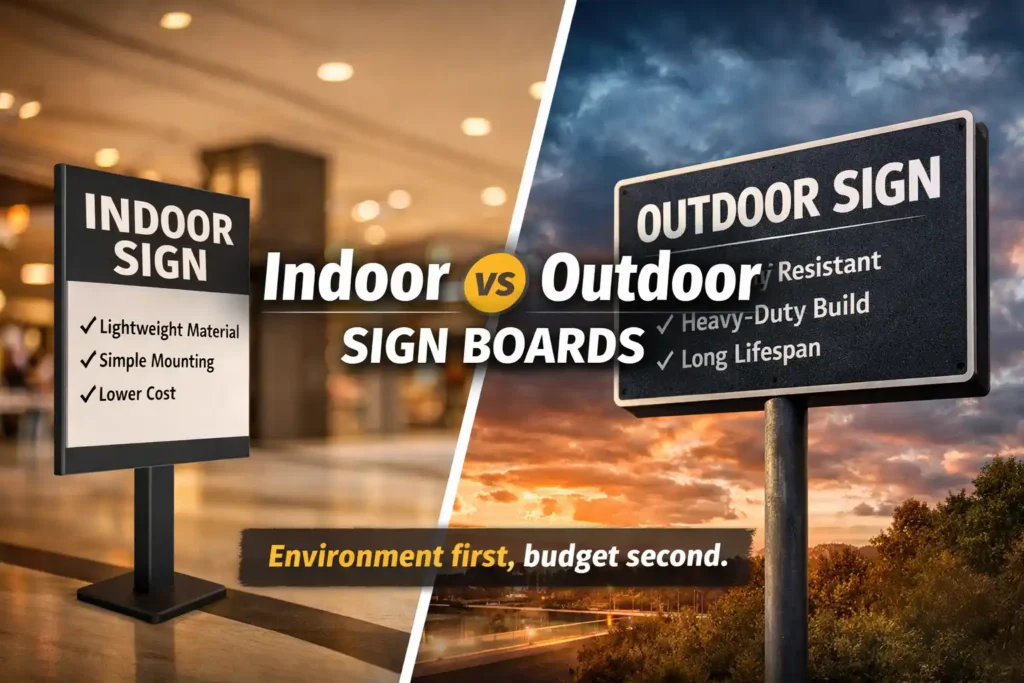
- Material, Indoor boards use lightweight acrylic or foam core; outdoor boards use aluminum, vinyl, or weatherproof plastics.
- Visibility, Outdoor signage needs high contrast and outdoor-rated inks for readability from distance.
- Longevity, Outdoor signs are engineered for longer life in changing conditions.
- Outdoor signs may cost more due to durable materials and production specs.
Indoor Sign Board Benefits
Indoor sign boards play functional and experiential roles in your space:
✔ ️ Wayfinding, Help customers easily find sections (e.g., directions to departments).
✔ ️ Branding, Reinforce identity right where customers interact with your business.
✔ Promotion, Highlight offers, policies, or seasonal messaging.
For example, while planning sign placement inside a store, you can pair signage with branded items like Bags that customers carry out. These bags continue your visual message beyond the store interior, creating further touch points with your brand after the customer leaves.
Also, useful indoor tools include Clothing Apparel such as branded T-shirts or staff uniforms. These subtly reinforce your visual identity around signage, creating a cohesive brand space.
Quick insight: Indoor signage focuses more on interaction and internal experience, while outdoor signage prioritizes external visibility and environmental endurance.
Outdoor Sign Board Advantages
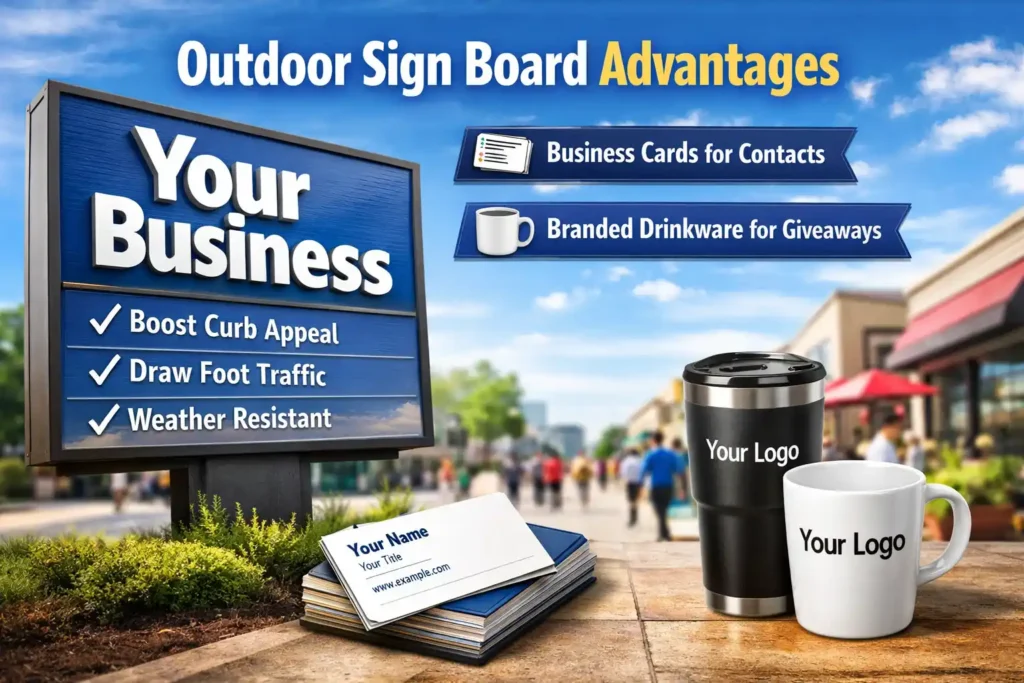
Outdoor sign boards are your front-line visual ambassadors to the world. They:
✔️ Boost curb appeal and first impressions
✔️ Draw in foot traffic and passing vehicles
✔️ Endure weather elements (sunlight, rain, temperature swings)
Outdoor boards are built from rugged materials with outdoor-safe printing and mounting hardware. If your sign aims to reach people before they enter your space, outdoor is the choice.
Alongside signage strategy, consider Business Cards. After noticing your outdoor sign, customers may want a card to remember your contact info. Business cards help convert visual interest into real interaction.
And don’t forget Drinkware like branded mugs or tumblers for employees or giveaways. These enhance the overall brand experience, especially in outdoor event settings where people interact with your signage and then take home a branded drinkware item prolonging logo exposure.
What Materials Are Used for Indoor vs Outdoor Sign Boards?
Indoor signs use lightweight, aesthetic materials. Outdoor signs use weather-resistant, heavy-duty materials.
Indoor Sign Board Materials
Common materials include:
- Foam board
- Acrylic
- PVC
- Fabric banners
- Wall vinyl graphics
These are perfect for:
- Office directories
- Retail promotions
- Event backdrops
- Wall branding
Indoor environments are climate-controlled, so materials don’t need UV resistance or waterproofing.
Outdoor Sign Board Materials
Outdoor signs are built for survival.
Common materials:
- Aluminum composite panels
- Corrugated plastic (Coroplast)
- Weatherproof vinyl
- Stainless steel
- LED-lit channel letters
These materials resist:
- Sun fading (UV exposure)
- Rain and humidity
- Wind pressure
- Temperature fluctuations
In short: Indoor signage prioritizes design flexibility; outdoor signage prioritizes structural endurance.
Are Outdoor Sign Boards More Expensive?
Yes, typically. Outdoor signage costs more due to material durability and installation requirements.
Why Outdoor Costs More?
- Thicker, weather-resistant materials
- UV-protected inks
- Reinforced mounting systems
- Permits (in some cities)
- Professional installation
Indoor Sign Cost Advantages
- Lightweight materials
- Easier installation
- Lower production complexity
However, indoor signage may need more frequent updates if you run promotions regularly.
Indoor vs Outdoor Sign Boards
| Feature | Indoor Sign Boards | Outdoor Sign Boards |
| Environment | Controlled (inside buildings) | Exposed to weather |
| Material Strength | Lightweight | Heavy-duty |
| UV Protection | Not required | Essential |
| Cost | Lower | Higher |
| Installation | Simple mounting | Structural support needed |
| Lifespan | 1–3 years typical | 3–10+ years |
Bottom line: Choose based on environment first, budget second.
Where Should You Use Indoor Sign Boards?
Indoor signs are ideal for:
- Reception areas
- Conference rooms
- Retail shelves
- Trade show booths
- Hospitals and clinics
For example, inside retail environments, combining indoor signage with Photo & Personalized Gifts creates a stronger emotional branding experience. Customized wall displays or branded décor elements enhance visual storytelling and customer engagement. Additionally, Stickers & Labels are powerful indoor branding tools. You can use them for:
- Window decals
- Shelf labeling
- Promotional graphics
- Directional markers
These extend the purpose of indoor signage into small but impactful brand touchpoints.
When Should You Choose Outdoor Sign Boards?
Outdoor signage is best when:
- You need roadside visibility
- Your storefront must attract walk-in traffic
- You operate in competitive retail zones
- You want 24/7 brand exposure
Restaurants, clinics, gyms, and retail stores rely heavily on outdoor signage to generate first impressions.
In many cases, outdoor visibility works best when paired with cohesive brand elements such as Clothing & Apparel for staff uniforms. When employees step outside or engage customers near storefront signage, consistent branding reinforces recognition and professionalism.
You can also distribute Bags during promotions or events. Once customers notice your outdoor signage and enter your store, branded bags help carry your logo back into the community — effectively extending the reach of your sign board.
Can You Use Indoor Sign Boards Outside?
No, not recommended. Indoor signs lack:
- Waterproof coatings
- UV-resistant printing
- Structural stability for wind
Using indoor signage outdoors can cause:
- Fading
- Warping
- Peeling graphics
- Safety risks
Always match your sign board to its environment.
How Do You Choose the Right Sign Board for Your Business?
Match the sign board type to your location, marketing goal, and lifespan expectations.
Step 1: Define Your Goal
Are you trying to attract new customers or guide existing ones?
- Attract = Outdoor signage
- Guide / Inform = Indoor signage
For example, a café might use an outdoor illuminated board to draw traffic, then use indoor menu boards and wall graphics to enhance the customer experience.
Step 2: Evaluate Environmental Exposure
Outdoor signs must handle:
- UV rays
- Rain and moisture
- Wind load
- Temperature swings
Indoor signs operate in controlled conditions. If you install indoor-grade signage outside, it may fade quickly, leading to unnecessary replacement costs.
Step 3: Consider Brand Consistency
Sign boards don’t work alone. They’re part of a brand ecosystem.
Business Cards help convert interest from your outdoor signage into direct contact. When someone sees your sign and walks in, a business card keeps your brand remembered long after they leave.
Stickers & Labels reinforce branding on packaging, windows, and surfaces, especially useful when aligning indoor signage with promotional materials.
Drinkware extends visibility beyond your storefront. If your logo appears on mugs or tumblers, it complements both indoor and outdoor signage efforts through repeated brand exposure.
Bags act like moving billboards. After customers are drawn in by outdoor signage and guided by indoor signs, branded bags continue marketing in public spaces.
Clothing & Apparel unify staff appearance with your signage aesthetics. This strengthens trust and brand professionalism, especially in storefront businesses.
Photo & Personalized Gifts enhance indoor spaces visually, adding emotional appeal that complements indoor sign boards.
And everything integrates through Easy Print LLC, allowing cohesive branding across signage and print assets.
In short: Sign boards create attention. Branded materials sustain recognition.
Common Mistakes Businesses Make
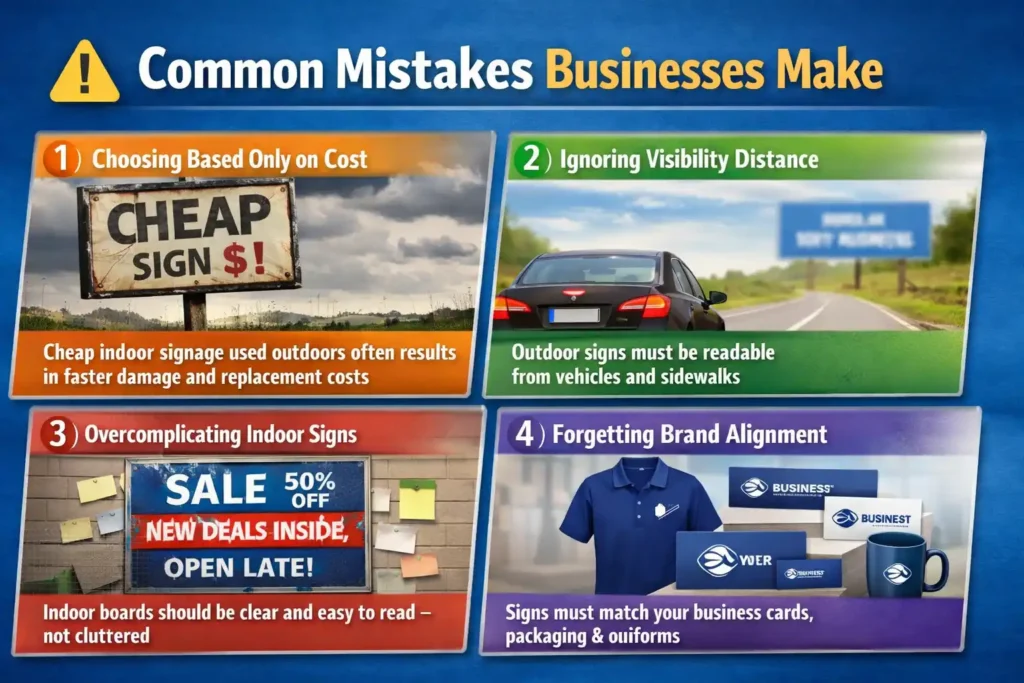
1) Choosing Based Only on Cost
Cheap indoor signage used outdoors often results in faster damage and replacement costs.
2) Ignoring Visibility Distance
Outdoor signs must be readable from vehicles and sidewalks.
3) Overcomplicating Indoor Signs
Indoor boards should be clear and easy to read — not cluttered.
4) Forgetting Brand Alignment
Sign boards must visually match your business cards, packaging, uniforms, and promotional items.
Which Sign Board Gives Better Returns?
Outdoor Signage ROI
- Increases foot traffic
- Builds first impression
- 24/7 advertising
Indoor Signage ROI
- Enhances customer experience
- Improves navigation
- Encourages upsells
The highest ROI happens when both work together.
Example flow: Outdoor sign → Customer enters → Indoor sign guides → Business card given → Branded bag carried → Brand seen again outside.
That’s a full marketing loop.
Final Takeaway
So the bottom line is, If your priority is getting noticed, choose outdoor signage. If your priority is guiding and converting customers inside, choose indoor signage. The smartest businesses use both, supported by cohesive branding tools like business cards, stickers, apparel, bags, drinkware, and personalized prints. Sign boards start the conversation. Brand consistency closes it.
FAQs
What is the main difference between indoor and outdoor sign boards?
Indoor signs are for controlled environments; outdoor signs are built to resist weather and attract attention externally.
Which sign board lasts longer?
Outdoor sign boards typically last longer due to stronger materials and UV protection.
Are outdoor sign boards worth the investment?
Yes, if visibility and attracting new customers are your primary goals.
Can small businesses use both?
Absolutely. Many small businesses benefit from combining both for full brand impact.
How do I know which one my business needs?
Start by identifying whether your main challenge is visibility (outdoor) or navigation/experience (indoor).