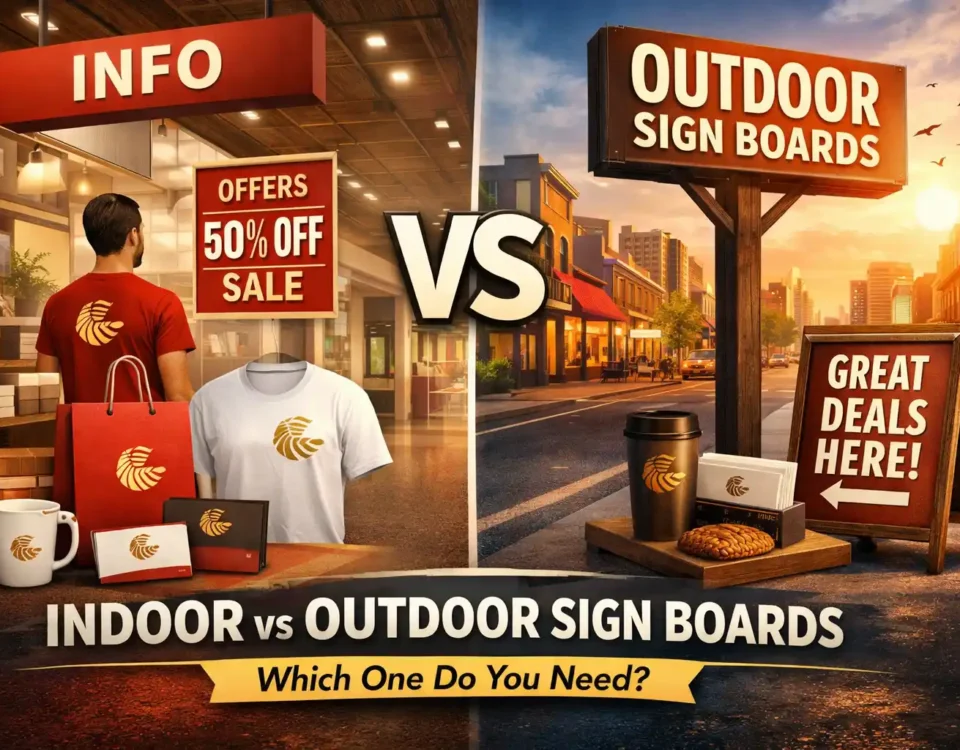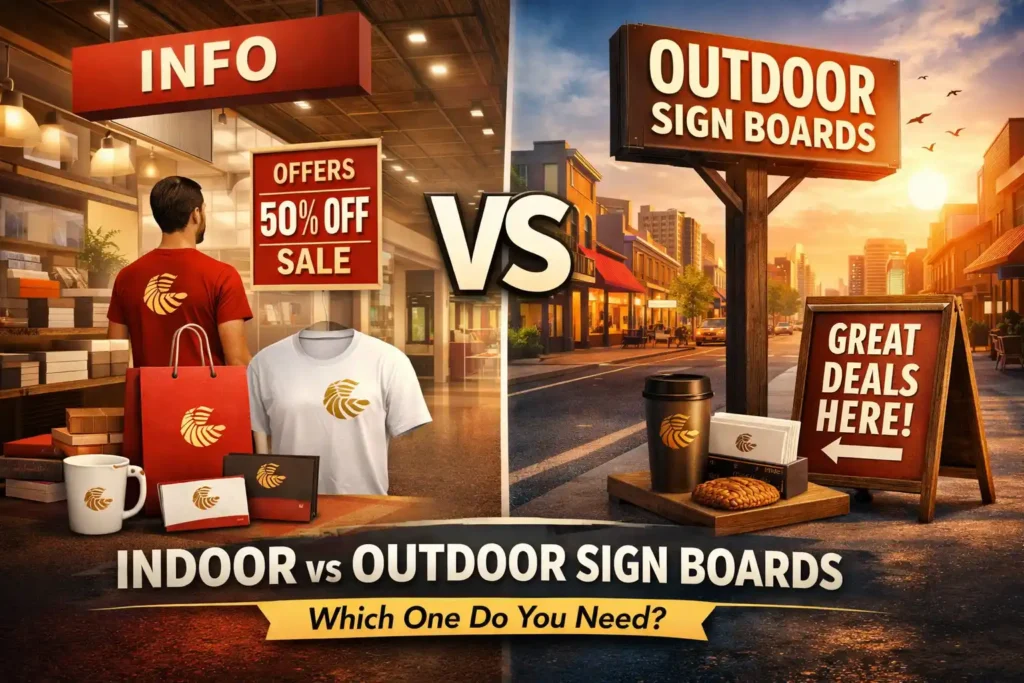


Indoor vs Outdoor Sign Boards: Which One Do You Need?
March 13, 2026
What Are Die-Cut Stickers and When Should You Use Them? (Updated for 2026)
March 13, 2026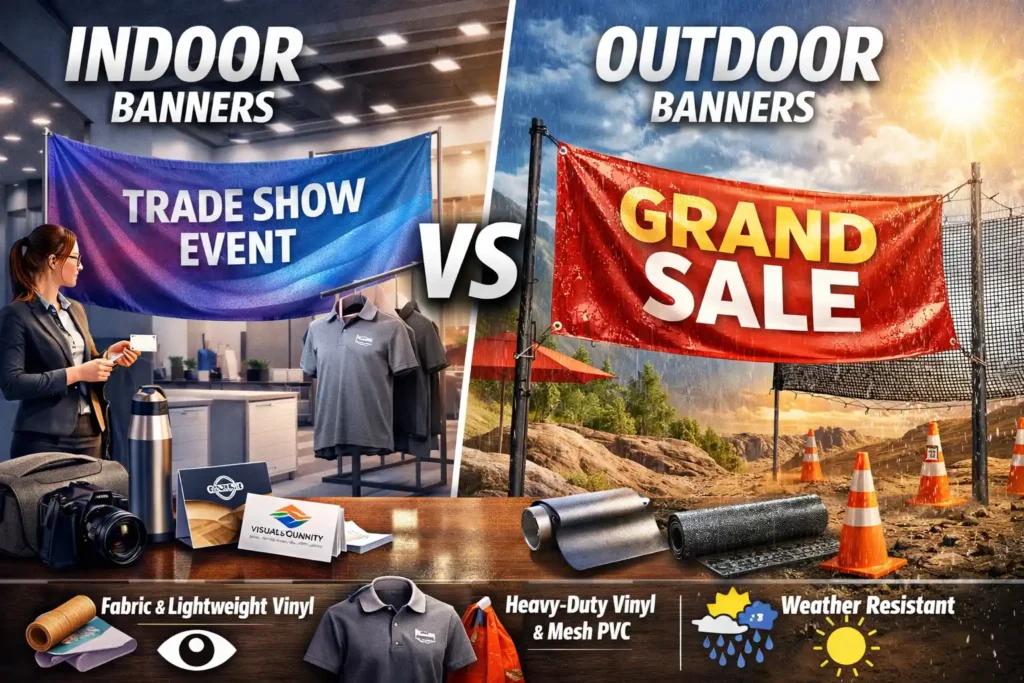
Summary
- Indoor banners prioritize visual quality and lightweight materials.
- Outdoor banners require weather resistance, UV protection, and durability.
- Vinyl is ideal outdoors; fabric works best indoors.
- Choosing the wrong material reduces lifespan and ROI.
- Pair banners with branded materials like Business Cards and Clothing & Apparel for stronger brand impact.
What Is the Difference Between Indoor and Outdoor Banner Materials?
Indoor banner materials are designed for visual clarity and lightweight display in controlled environments, while outdoor banner materials are engineered for durability, UV resistance, moisture protection, and wind exposure.
If you’ve ever wondered why some banners fade, tear, or curl quickly, the material choice is usually the reason. Understanding indoor vs outdoor banner material differences helps you avoid costly mistakes and extend the lifespan of your marketing investment.
Why Does Banner Material Matter?
Material determines durability, print clarity, weather resistance, and overall return on investment. Banner material impacts:
- Ink absorption and color vibrancy
- Resistance to wind, rain, and sunlight
- Weight and installation method
- Longevity (months vs years)
For example, trade show displays inside convention halls don’t face weather stress. But outdoor storefront banners must handle rain, dust, and UV rays daily.
Here’s what matters, Indoor banners focus on aesthetics, while outdoor banners focus on survival.
What Materials Are Commonly Used for Indoor Banners?
Micro Answer:
Indoor banners typically use fabric, lightweight vinyl, or polyester for better print detail and flexibility.
1) Fabric Banners
- Soft texture
- High-resolution printing
- Wrinkle-resistant
- Ideal for exhibitions and retail displays
Fabric banners provide a premium look for corporate environments. They enhance visual comfort, which positively influences customer perception and reduces visual fatigue in indoor spaces.
2) Lightweight Vinyl (13 oz)
- Smooth surface
- Bright color output
- Budget-friendly
- Easy to roll and transport
These are perfect for short-term indoor promotions.
Indoor vs Outdoor Banner Materials
| Feature | Indoor Banner | Outdoor Banner |
| Material Type | Fabric / Light Vinyl | Heavy-duty Vinyl / Mesh |
| Weight | Lightweight | Thicker (15–18 oz) |
| Weather Resistance | Not required | UV + Water resistant |
| Lifespan | 6–12 months | 2–5 years |
| Best Use Case | Trade shows, events | Storefronts, billboards |
Indoor = aesthetics.
Outdoor = durability.
Can Indoor Banner Material Be Used Outdoors?
Not recommended, indoor materials lack UV coating and tear resistance needed for outdoor exposure. Using indoor fabric outside may cause:
- Fading within weeks
- Edge fraying
- Wind damage
- Ink deterioration
So the bottom line is: Always match material to the environment.
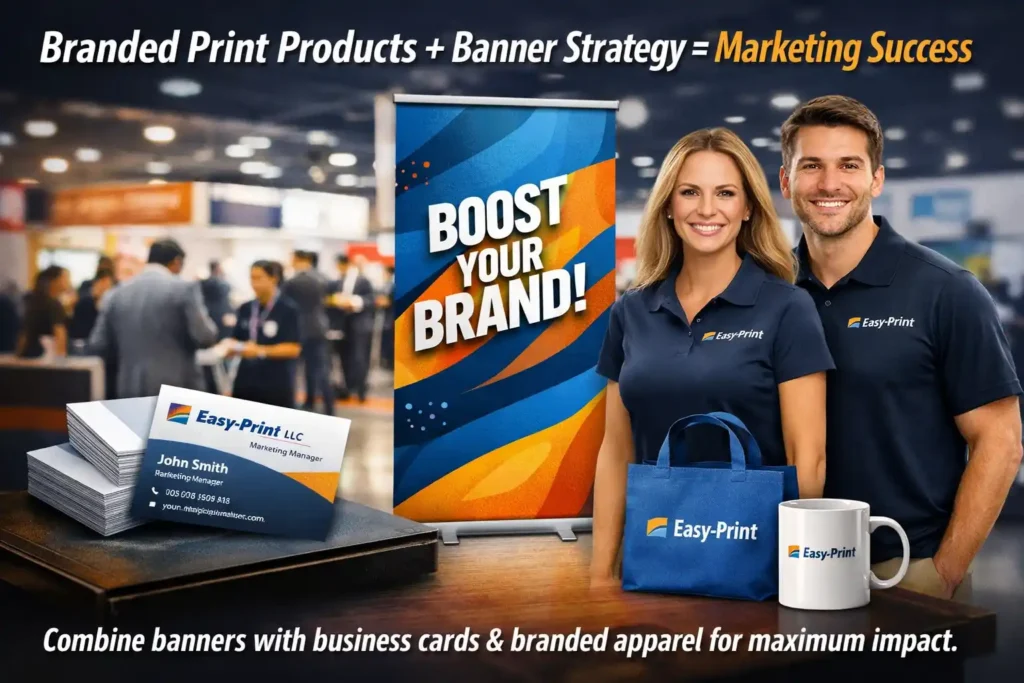
How Do Branded Print Products Complement Banner Strategy?
Banners alone create visibility, but combining them with printed assets multiplies marketing effectiveness.
At trade shows or indoor events, pairing your banner with Business Cards ensures visitors can take your contact details home. This increases brand recall and reduces post-event follow-up stress, improving workflow efficiency and mental clarity for your sales team.
Meanwhile, staff wearing coordinated Clothing & Apparel reinforces brand professionalism. A consistent visual identity builds trust, reduces customer hesitation, and creates a psychologically reassuring brand presence.
For indoor exhibitions, branded attire and banners create a cohesive environment that improves engagement and lowers marketing friction. Explore full custom printing solutions at Easy-Print LLC to align your banner material with complementary branding products.
Why Choosing the Right Banner Material Saves Money?
Choosing incorrectly leads to:
- Premature replacement costs
- Brand image damage
- Installation problems
- Reduced visibility
Indoor banners are cost-efficient because they don’t require weather coatings. Outdoor banners cost more upfront, but they save money long-term due to durability. Paying slightly more for outdoor-grade vinyl prevents repeated reprints.
Why Do Businesses Often Choose Wrong?
Many businesses prioritize price over environment fit. That decision often results in faded signage, torn edges, and poor brand perception.
If you’re investing in banners for storefronts or outdoor events, think long-term durability. If you’re preparing for indoor expos, focus on print quality and visual softness.
Indoor banners prioritize visual appeal and lightweight design, while outdoor banners require weather-resistant, UV-protected materials. Choosing correctly improves lifespan, branding impact, and marketing ROI.
Which Banner Material Lasts Longest Outdoors?
Heavy-duty vinyl (15–18 oz) and mesh PVC banners last the longest outdoors because they resist UV rays, moisture, tearing, and wind pressure.
If your banner will face direct sunlight, rain, or wind, material strength becomes more important than print softness. Outdoor banner materials are engineered differently, and that difference determines whether your signage lasts months or years.
What Materials Are Used for Outdoor Banners?
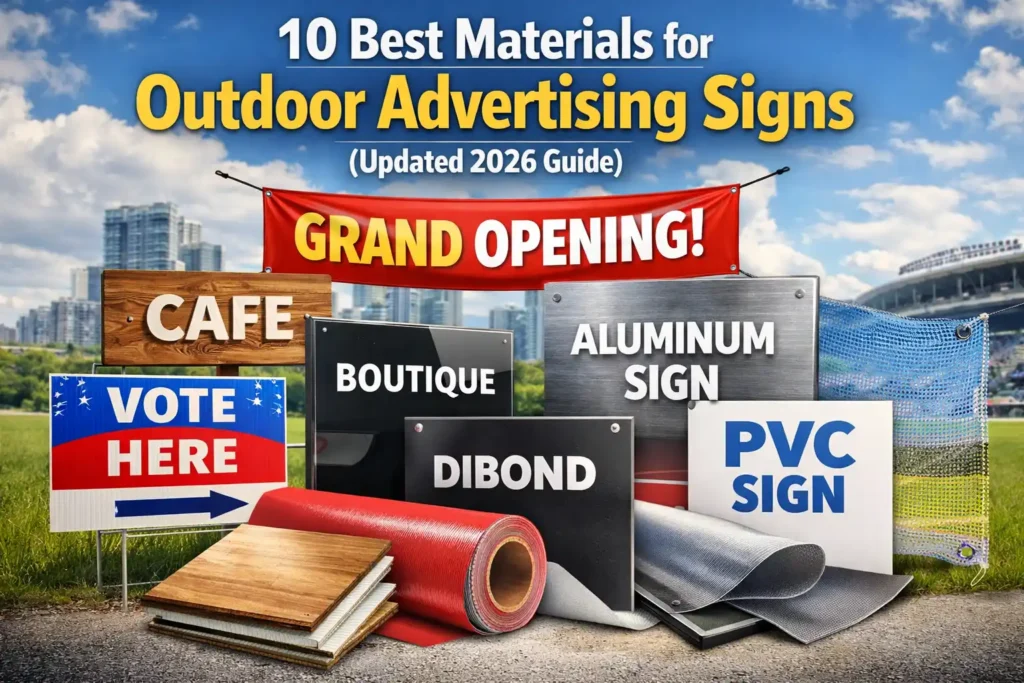
Outdoor banners are typically made from heavy-duty vinyl, mesh PVC, or coated polyester for durability and weather resistance.
1) Heavy-Duty Vinyl (15 oz–18 oz)
- Thick and tear-resistant
- UV-coated to prevent fading
- Waterproof surface
- Ideal for storefronts and long-term signage
This is the most common outdoor banner material because it balances strength and print quality.
2) Mesh PVC Banners
- Small perforated holes allow airflow
- Reduces wind pressure
- Best for fences and windy areas
- Slightly reduced image sharpness
Mesh banners are excellent for construction sites or outdoor sports events.
3) Scrim Vinyl (Reinforced Core)
- Polyester fabric embedded between vinyl layers
- Extra tensile strength
- Long-term commercial installations
So the bottom line is: the harsher the environment, the thicker and more reinforced your banner should be.
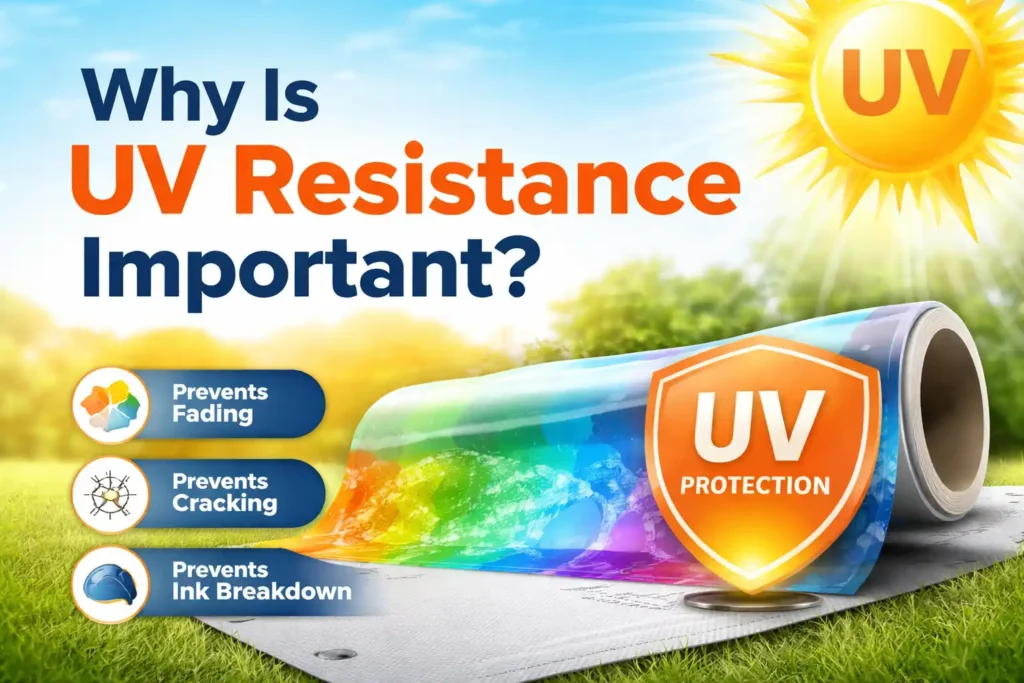
Why Is UV Resistance Important?
UV-resistant coating prevents fading, cracking, and ink breakdown caused by direct sunlight exposure. Sunlight contains ultraviolet radiation that degrades both ink and material fibers. Without UV coating:
- Colors fade within weeks
- Material becomes brittle
- Edges crack or curl
Outdoor vinyl banners are treated with UV inhibitors, extending lifespan up to 3–5 years depending on exposure. Indoor banners prioritize appearance. Outdoor banners prioritize environmental survival.
Weather Impact Breakdown
| Environmental Factor | Indoor Banner Impact | Outdoor Banner Impact |
| UV Exposure | Minimal | High – needs UV coating |
| Rain | None | Waterproof required |
| Wind | None | Requires reinforced grommets |
| Temperature Changes | Stable | Must resist expansion/contraction |
| Dust & Debris | Low | High surface durability needed |
Can Fabric Banners Be Used Outdoors?
Only temporarily, fabric lacks waterproof coating and tear resistance for long-term outdoor use. Fabric may work for:
- Short outdoor events (1–2 days)
- Covered patios
- Light weather exposure
But for long-term use, vinyl remains superior.
Why Grommets and Finishing Matter?
Outdoor banners require:
- Reinforced hems
- Rust-proof metal grommets
- Strong mounting systems
Improper installation reduces lifespan even if the material is correct. If you’re preparing for an outdoor marketing campaign, combining your banner with portable branding materials enhances campaign ROI. For example:
Distribute promotional materials inside custom Bags during outdoor events. Durable branded bags increase retention and reduce single-use waste, supporting environmental responsibility and improving brand perception.
Add matching Stickers & Labels to event surfaces or packaging. These extend your message beyond the banner itself and provide additional brand exposure.
These complementary products increase engagement and reduce marketing stress because your branding stays consistent across all touchpoints.
Outdoor Banner Lifespan, What to Expect?
Properly installed heavy-duty vinyl banners last 2–5 years outdoors. Lifespan depends on:
- Climate severity
- Wind exposure
- Installation method
- Sunlight intensity
In high-sun regions, UV fade occurs faster. In windy zones, mesh banners perform better than solid vinyl. Choose material based on climate, not just budget.
How Do Outdoor Banners Improve Marketing Performance?
Outdoor signage:
- Increases local brand awareness
- Supports storefront traffic
- Reinforces promotional messaging
- Works 24/7
When paired with personalized marketing items like Photo & Personalized Gifts, you create emotional brand connections. Custom gifts at events improve customer satisfaction and boost positive brand associations.
Additionally, branded Drinkware distributed during outdoor campaigns increases long-term brand exposure. Reusable drinkware supports hydration and sustainability awareness, aligning your business with health-conscious and eco-friendly messaging.
For complete printing and branding solutions, visit Easy-Print LLC to coordinate banners with promotional materials seamlessly.
Why Outdoor Banners Fail Early?
Most early failures occur because businesses:
- Use indoor vinyl outside
- Skip UV coating
- Underestimate wind load
- Install improperly
The result? Torn corners, faded logos, and wasted marketing spend. Choosing the right outdoor banner material prevents these issues and protects brand credibility.
Outdoor banners require heavy-duty vinyl or mesh with UV protection and waterproof coating. Fabric is best for indoor use only. Matching material to the environment increases lifespan and marketing ROI.
Are Outdoor Banners More Expensive Than Indoor Banners?
Yes, outdoor banners typically cost more because they use thicker vinyl, UV-resistant coatings, reinforced hems, and weatherproof finishing. But here’s what matters: higher upfront cost often means lower long-term replacement expense.
Indoor vs Outdoor Banner Cost Comparison
| Factor | Indoor Banner | Outdoor Banner |
| Material Cost | Lower | Higher |
| Thickness | 8–13 oz | 15–18 oz |
| UV Coating | Not required | Required |
| Weatherproofing | No | Yes |
| Average Lifespan | 6–12 months | 2–5 years |
| Long-Term ROI | Medium | High |
Indoor = budget-friendly, short-term use.
Outdoor = higher investment, long-term durability.
How Do You Choose the Right Banner Material?
Choose based on environment, duration, climate exposure, and marketing goals.
Step-by-Step Banner Selection Checklist (How-To Format)
- Identify placement (indoor vs outdoor).
- Assess weather exposure (sun, wind, rain).
- Decide campaign duration.
- Determine mounting method.
- Match thickness and finish accordingly.
Banner material selection refers to choosing the appropriate substrate (vinyl, mesh, fabric) based on environmental conditions and intended usage duration. So the bottom line is: environment dictates material, not price alone.
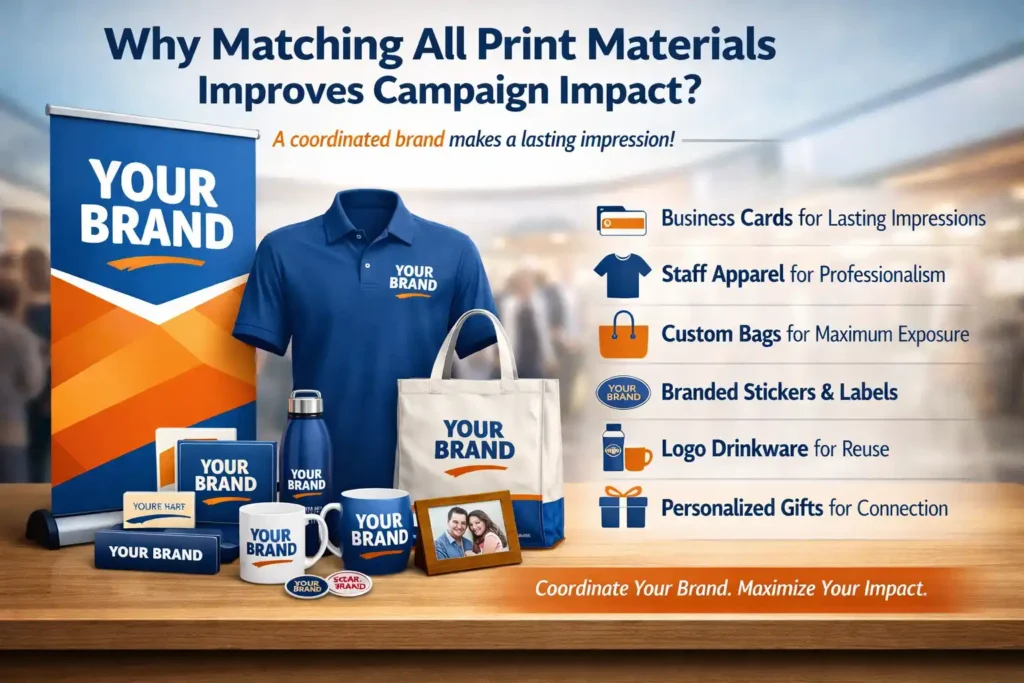
Why Matching All Print Materials Improves Campaign Impact?
Your banner is the visual anchor, but campaign success multiplies when all materials align. For example:
- Handing out Business Cards at indoor events ensures visitors remember your brand after seeing your banner.
- Coordinated Clothing & Apparel for staff increases professionalism and reduces customer hesitation.
- Promotional materials carried in custom Bags extend exposure beyond the event.
- Complementary Stickers & Labels reinforce your campaign message.
- Branded Drinkware encourages reuse, supporting sustainability and promoting hydration awareness.
- Memorable Photo & Personalized Gifts create emotional engagement and long-term brand recall.
When everything is visually consistent, customers experience less cognitive friction — which increases trust and improves marketing effectiveness. Coordinate your full branding ecosystem through Easy-Print LLC for seamless integration.
Final Takeaway
If your banner will stay inside, focus on fabric or lightweight vinyl for premium visuals. If it faces sun, rain, or wind, invest in heavy-duty or mesh vinyl for longevity. Choosing correctly protects your brand image, prevents unnecessary reprints, and ensures marketing consistency.
The best strategy? Align your banner material with complementary branded assets for a unified campaign.
FAQs
What is the best banner material for windy areas?
Mesh PVC is best because perforations allow airflow, reducing tearing risk.
How long do outdoor vinyl banners last?
Typically 2–5 years depending on UV exposure and installation quality.
Can indoor vinyl be laminated for outdoor use?
Lamination helps slightly, but it does not replace heavy-duty outdoor-grade vinyl.
Is mesh banner quality lower than solid vinyl?
Image sharpness is slightly reduced, but durability in wind improves significantly.
Which banner material is best for trade shows?
Fabric banners are ideal for indoor trade shows due to premium finish and lightweight transport.