


Top 10 Event Banner Ideas for Startups
March 12, 2026
How to Design a Brochure That Actually Converts (Updated 2026)?
March 12, 2026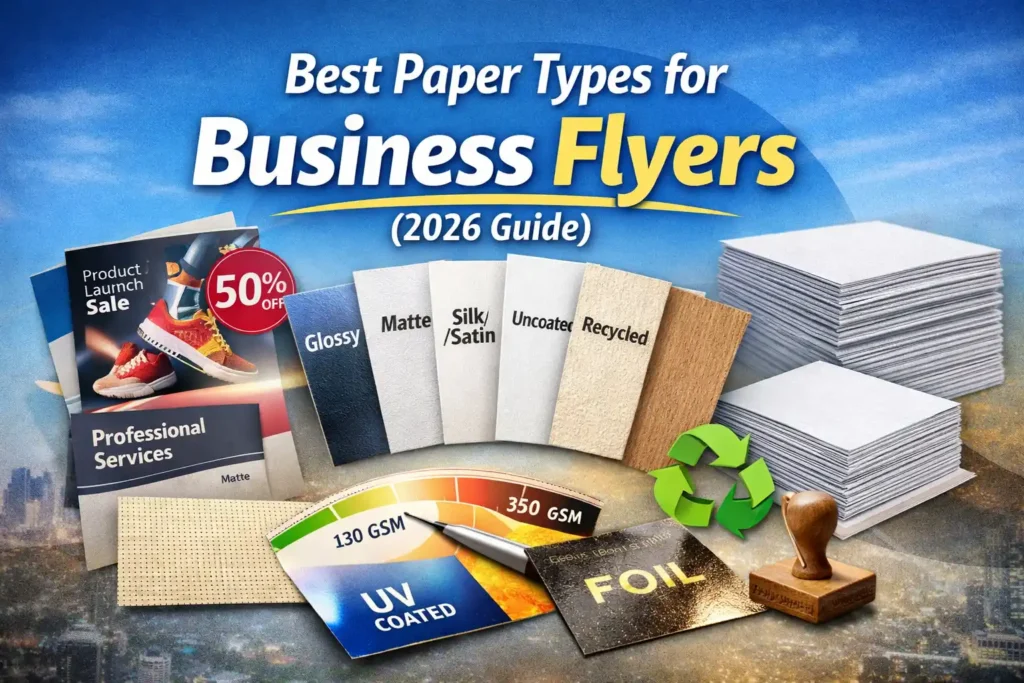
Summary
- The best paper types for business flyers depend on GSM weight, finish, and campaign goal.
- Glossy paper enhances colors and images for promotions.
- Matte paper offers a professional, readable finish.
- Silk/Satin paper balances shine and elegance.
- Uncoated paper is ideal for eco-friendly and writable flyers.
What Is the Best Paper Type for Business Flyers?
The best paper type for business flyers depends on your marketing goal, print design, and durability needs. High-GSM glossy paper works best for image-heavy promotions, while matte or silk finishes suit corporate branding. Uncoated paper is ideal for eco-friendly or writable flyers.
If you’re investing in flyer printing, choosing the right flyer paper options directly affects perceived brand quality, color vibrancy, and durability.
Let’s break down the top choices.
1) Premium Glossy Paper for Flyers
Glossy paper is best for vibrant, image-heavy marketing flyers because it enhances color saturation and shine.
What Is Glossy Flyer Paper?
Glossy paper is a coated paper stock that reflects light, making colors appear more vivid and high-contrast. It’s commonly available in 130–170 GSM for standard flyers and 250–300 GSM for premium durability.
Best Used For
- Restaurant promotions
- Event announcements
- Real estate flyers
- Product launch campaigns
Advantages
- Bright, sharp color reproduction
- Professional visual appeal
- Water-resistant surface
Disadvantages
- Glare under strong lighting
- Harder to write on
Glossy paper is ideal for visual-heavy campaigns where bold design matters more than handwriting space. It signals premium branding instantly.
2) High GSM Matte Flyer Paper
Matte paper is best for professional, readable business flyers with a smooth, non-reflective finish.
What Is Matte Flyer Paper?
Matte paper has a non-gloss coated surface that reduces glare and gives a refined, soft finish. Popular GSM ranges include 150–250 GSM for durable corporate flyers.
Why Do Businesses Choose Matte?
- Easier readability in bright environments
- Elegant, understated branding
- Easier to write notes or appointment details
Best For
- Corporate services
- Law firms
- Financial advisors
- Healthcare promotions
Gloss vs Matte, Which Is Better?
| Feature | Glossy Paper | Matte Paper |
| Color Vibrancy | High | Moderate |
| Readability | Medium | High |
| Writable Surface | Poor | Good |
| Professional Look | Bold | Elegant |
Matte paper works best for brands that want credibility, clarity, and a clean finish without glare.
3) Silk / Satin Finish Flyer Paper
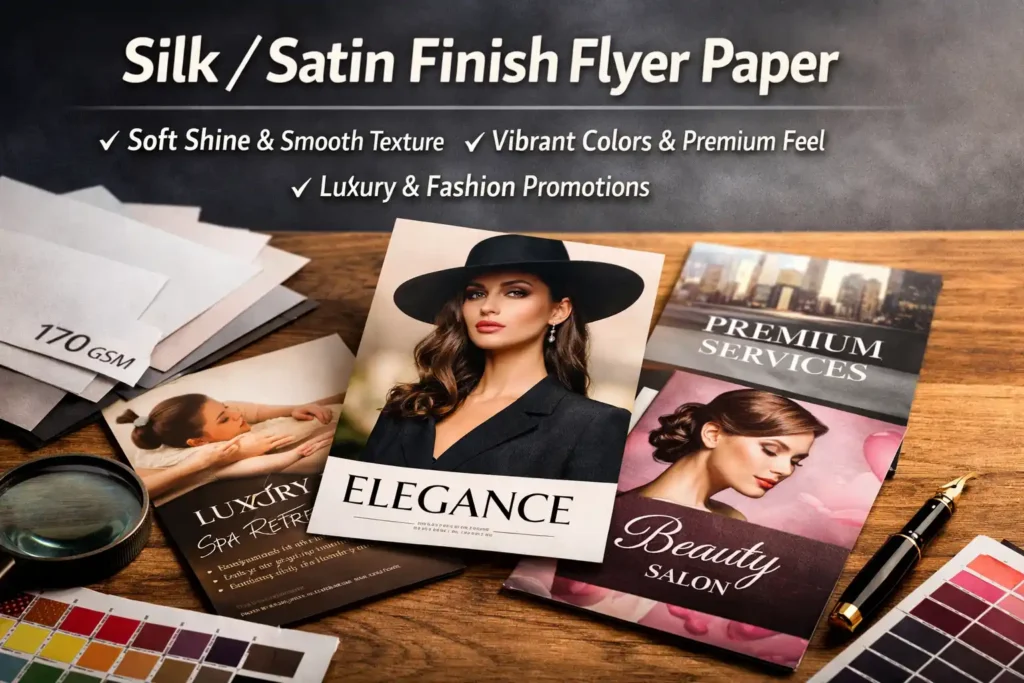
Silk paper balances gloss and matte, offering soft shine with smooth texture.
What Is Silk Flyer Paper?
Silk (also called satin) paper is lightly coated, providing a subtle sheen without strong reflection. It’s commonly used in 170–300 GSM weights.
Why Is It Popular?
- Premium feel without glare
- Professional texture
- Good color reproduction
- More durable than standard matte
Best Use Cases
- Luxury brand flyers
- Beauty salons & spas
- Fashion promotions
- Premium service marketing
Silk paper offers the perfect middle ground between vibrant gloss and soft matte, making it versatile for upscale branding.
4) Uncoated Natural Flyer Paper
Uncoated paper is best for eco-friendly, writable, and minimalist business flyers.
What Is Uncoated Flyer Paper?
Uncoated paper lacks surface coating, giving it a natural texture and absorbent surface. Often used in 120–200 GSM. Promote events using matching Stickers & Labels for brand recall.
Key Benefits
- Fully writable
- Eco-conscious brand positioning
- Organic, natural feel
- Easy to recycle
Best For
- Organic brands
- Farmers markets
- Non-profits
- Sustainable businesses
Environmental Advantage
Uncoated and recycled paper stocks align with sustainability marketing strategies, which increasingly influence consumer purchasing behavior.
Uncoated paper reinforces authenticity and eco-conscious branding while allowing practical handwriting use.
5) Recycled Flyer Paper Types
Recycled flyer paper is best for eco-conscious brands that want sustainable marketing materials without sacrificing print quality. Offer branded Drinkware at events to reinforce marketing impressions.
What Is Recycled Flyer Paper?
Recycled paper is made from post-consumer or post-industrial waste fibers. It is available in 120–300 GSM, depending on the desired thickness.
Modern recycled stock offers surprisingly high print clarity compared to older versions.
Best For
- Green startups
- Organic food brands
- Environmental NGOs
- Ethical fashion businesses
Benefits
- Supports sustainability marketing
- Reduces carbon footprint perception
- Builds trust among eco-aware consumers
Considerations
- Slightly muted colors compared to gloss
- Natural texture variation
Recycled flyer paper strengthens your brand’s sustainability message while maintaining professional print performance.
6) Cardstock (Heavyweight Flyer Paper)
Cardstock (250–350 GSM) is ideal for durable, premium flyers that need to last longer. Distribute materials in custom Bags during trade shows.
What Is Cardstock?
Cardstock is a thick, rigid paper stock commonly used for premium business flyers, postcards, and mini brochures.
Ideal Use Cases
- Real estate open houses
- Luxury brand promotions
- Event invitations
- Trade show handouts
Why Choose Heavyweight Flyer Paper?
- Feels premium in hand
- More resistant to bending
- Higher perceived brand value
Standard GSM Guide
| GSM Range | Paper Type | Best For |
| 130–170 | Standard Flyers | Mass distribution |
| 200–250 | Premium Flyers | Corporate marketing |
| 300–350 | Cardstock | Luxury & durable flyers |
If you want your flyer to feel substantial and memorable, cardstock provides maximum durability and brand authority.
7) Textured Paper Finishes (Linen, Laid, Felt)
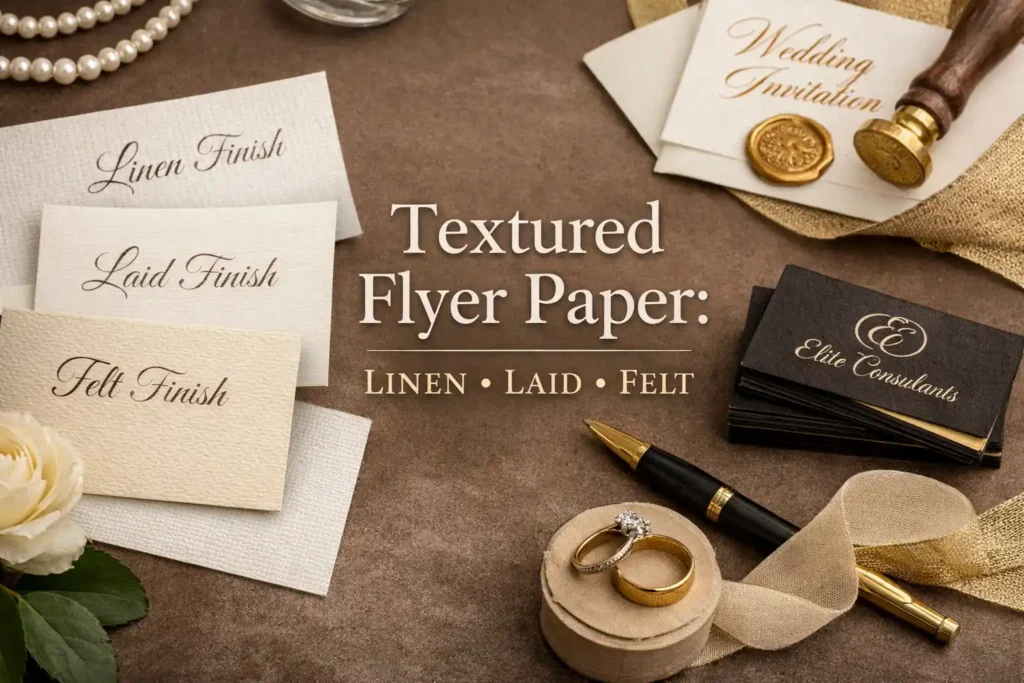
Textured paper adds tactile sophistication, making flyers feel unique and high-end.
What Is Textured Flyer Paper?
Textured papers include:
- Linen finish (fabric-like crosshatch pattern)
- Laid finish (horizontal ribbed lines)
- Felt finish (soft, subtle texture)
These are typically available in 200–300 GSM. Pair flyers with professional Business Cards for direct networking.
Best For
- Wedding planners
- Boutique brands
- Luxury services
- High-end consultants
Why Texture Matters in Marketing?
Tactile marketing increases engagement. When someone physically feels texture, it enhances memory recall and perceived value.
Pros
- Premium sensory experience
- Unique design differentiation
- Elegant appearance
Cons
- Higher printing cost
- Slightly reduced color sharpness
Textured flyer paper is perfect for brands that prioritize experience-driven marketing and premium positioning.
8) UV-Coated Flyer Paper
UV-coated paper provides high-gloss protection and superior durability for bold marketing flyers.
What Is UV Coating?
UV coating involves applying a liquid coating cured under ultraviolet light. It creates a super glossy, protective surface.
Types of UV Finish
- Full UV coating
- Spot UV (applied only to specific areas like logos)
Best For
- High-impact promotions
- Product launches
- Nightclub & event flyers
- Automotive marketing
Advantages
- Maximum shine
- Water & scratch resistance
- Eye-catching finish
Disadvantages
- Not writable
- Higher production cost
UV-coated flyers deliver maximum visual impact and protection, making them ideal for aggressive promotional campaigns. Enhance campaigns with personalized promotional items.
Paper Weight & Finish Selection Guide
Choosing the right flyer paper weight (GSM) and finish depends on distribution method and brand positioning.
Quick Decision Framework
| Campaign Type | Recommended Paper | Finish |
| Street Distribution | 130–170 GSM | Gloss or Matte |
| Corporate Services | 200–250 GSM | Matte or Silk |
| Luxury Promotion | 300 GSM Cardstock | Silk or Textured |
| Outdoor Use | 250+ GSM | UV Coated |
9) Budget-Friendly Flyer Paper Options
Budget flyer paper (100–130 GSM) is best for large-scale distribution where cost efficiency matters most.
What Is an Economy Flyer Paper?
Economy flyer paper is lightweight stock commonly used for:
- Street marketing campaigns
- Newspaper inserts
- Event mass handouts
- Political promotions
Why Choose Budget Paper?
- Lower printing cost
- Ideal for high-volume campaigns
- Fast production turnaround
Trade-Offs
- Less durable
- Lower perceived premium feel
- Limited resistance to wear
Budget flyer paper works best for short-term campaigns and mass exposure strategies where reach matters more than durability.
10) Premium Custom Flyer Stock
Custom flyer stock allows brands to choose unique finishes, thickness, and coatings for maximum differentiation.
Custom Options Include
- Foil stamping
- Embossed textures
- Soft-touch coating
- Extra-thick 350–400 GSM stock
Best For
- Luxury brands
- High-end product launches
- Boutique services
- Corporate annual promotions
Why Does It Matters?
Premium paper enhances:
- Brand authority
- Customer trust
- Perceived service quality
Custom flyer paper is a strategic branding investment that transforms simple marketing into a premium brand experience. Explore all professional printing solutions here.
How to Choose the Best Paper Type for Your Business Flyers (Step-by-Step)?
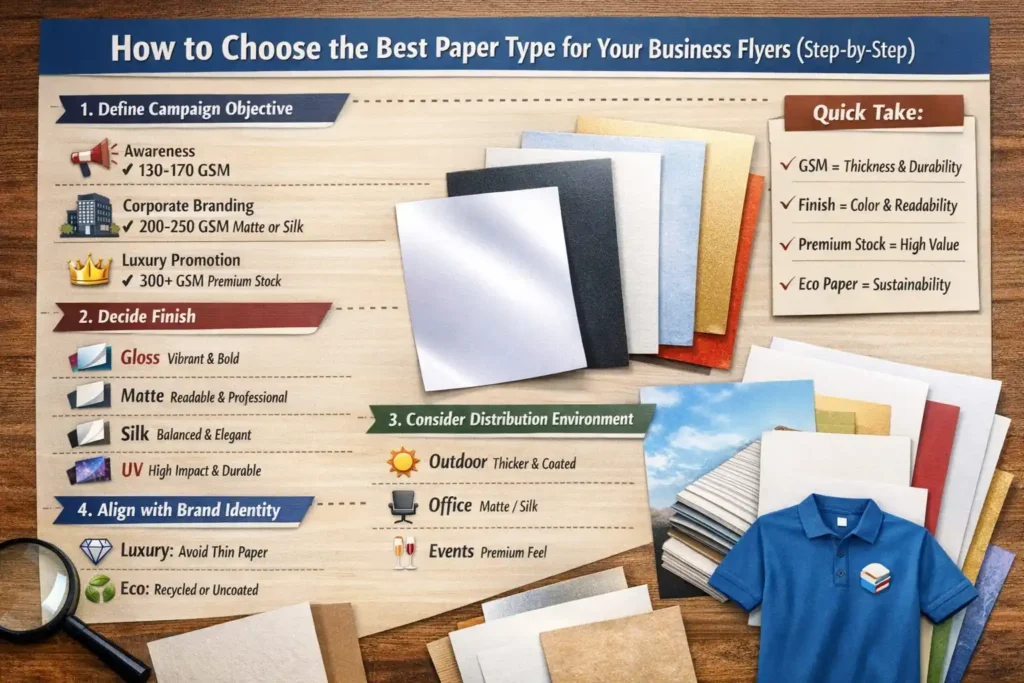
Choose flyer paper based on campaign goal, budget, durability needs, and brand positioning.
Step 1: Define Campaign Objective
- Awareness (mass distribution → 130–170 GSM)
- Corporate branding → 200–250 GSM matte or silk
- Luxury promotion → 300+ GSM premium stock
Step 2: Decide Finish
- Gloss = vibrant & bold
- Matte = readable & professional
- Silk = balanced & elegant
- UV = high impact & durable
Step 3: Consider Distribution Environment
- Outdoor → thicker & coated
- Office → matte/silk
- Events → premium feel matters
Step 4: Align With Brand Identity
Luxury brands should avoid thin paper. Eco brands benefit from recycled or uncoated stock. Print coordinated team uniforms for brand visibility.
Quick Take Box
- GSM determines thickness & durability
- Finish impacts color and readability
- Premium stock increases perceived value
- Eco paper supports sustainability branding
Final Takeaway
The best paper type for business flyers depends on your marketing objective, Budget, Brand positioning, and Distribution method.
If you’re running a mass campaign, lightweight gloss works well. If you’re targeting premium clients, 300 GSM silk or textured stock elevates your brand instantly. So the bottom line is, Paper quality directly influences how customers perceive your business.
FAQs
What GSM paper is best for business flyers?
200–250 GSM is ideal for professional marketing. For luxury promotions, 300 GSM cardstock provides better durability and brand impact.
Is glossy or matte paper better for flyers?
Glossy paper enhances color vibrancy, while matte improves readability and reduces glare. Choice depends on design purpose.
How does paper weight affect flyer quality?
Higher GSM increases durability, thickness, and perceived value. Lower GSM is cost-effective for mass distribution.
Can I write on glossy flyer paper?
Not easily. Matte or uncoated paper is better for handwriting.
Are recycled flyer papers good quality?
Yes. Modern recycled paper offers strong print clarity and supports eco-friendly branding.
Is 300 GSM too thick for flyers?
No. 300 GSM is ideal for premium, durable flyers or postcard-style marketing.
What finish looks most professional?
Matte and silk finishes are widely considered most professional for corporate branding.