


How to Design a Brochure That Actually Converts (Updated 2026)?
March 12, 2026
10 Best Materials for Outdoor Advertising Signs (Updated 2026 Guide)
March 13, 2026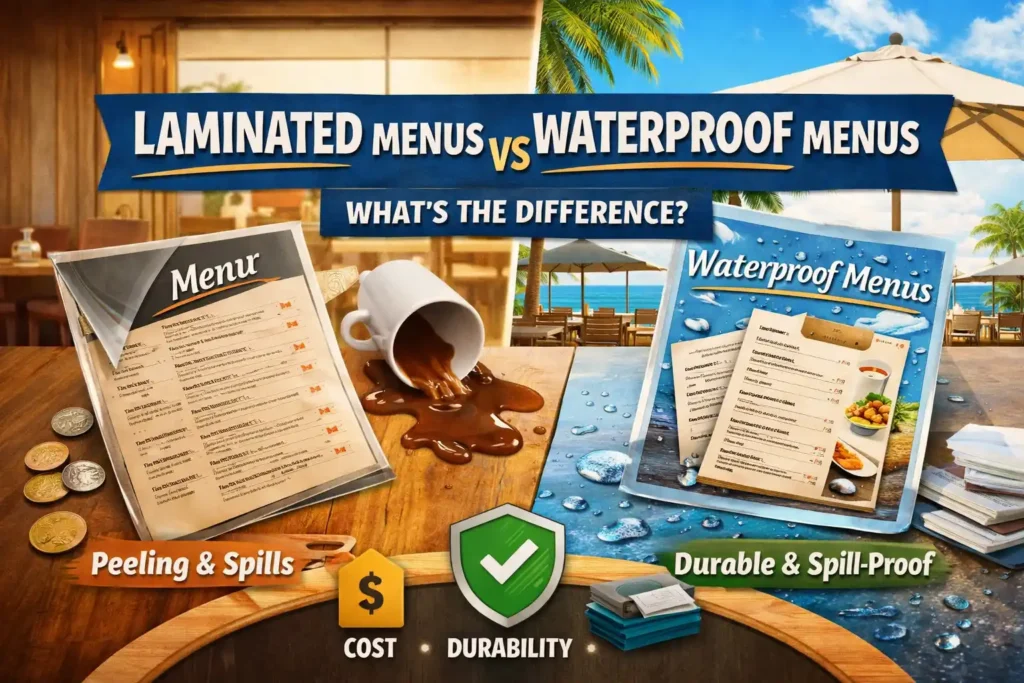
Summary
- Laminated menus are paper menus sealed inside plastic film.
- Waterproof menus are printed on synthetic, non-absorbent materials.
- Laminated menus are affordable but can peel over time.
- Waterproof menus last longer and resist spills better.
- Restaurants importing menu materials can reduce costs through OEM Manufacturing and Wholesale Trading solutions.
What Is the Difference Between Laminated and Waterproof Menus?
The difference between laminated and waterproof menus is in construction and durability. Laminated menus use printed paper sealed in plastic film, while waterproof menus are printed directly on synthetic, water-resistant materials. Waterproof menus generally last longer, resist peeling, and handle heavy cleaning better.
If you’re deciding between laminated vs waterproof menus, understanding material composition, lifespan, and usability is critical, especially for restaurants handling high customer turnover or outdoor dining.
Why Does Menu Material Matter for Restaurants?
Menu material directly impacts hygiene, durability, brand perception, and long-term replacement costs. Menus are high-touch surfaces. In busy restaurants, cafés, hotels, and quick-service chains, menus face:
- Spills (coffee, juice, sauces)
- Frequent sanitizing
- UV exposure (outdoor seating)
- Daily handling wear and tear
If the wrong material is chosen, menus curl, fade, peel, or absorb moisture, damaging brand image.
For restaurants sourcing materials internationally, this decision becomes strategic. Through Product Sourcing, businesses can identify high-quality synthetic substrates or lamination films from vetted global suppliers, ensuring both durability and cost efficiency.
Choosing the right menu material reduces replacement frequency, improves hygiene compliance, and protects brand presentation.
What Is a Laminated Menu?
A laminated menu is a printed paper menu encased in a thin plastic film layer through heat or adhesive sealing.
How Laminated Menus Are Made?
- Design printed on paper stock.
- Transparent plastic film applied on both sides.
- Heat or pressure seals edges.
- Trimmed to final size.
Key Characteristics
- Glossy or matte plastic finish
- Affordable production cost
- Easy wipe-clean surface
- Vulnerable to edge peeling over time
Laminated menus are commonly used in:
- Small cafés
- Diners
- Takeout restaurants
- Low-budget menu updates
However, heavy sanitization chemicals can cause lamination bubbles or separation.
For restaurants manufacturing menus at scale overseas, OEM Manufacturing helps customize thickness, edge sealing quality, and film durability. This ensures laminated menus meet international restaurant standards instead of using low-grade materials.
Laminated menus are cost-effective and wipeable but may degrade with heavy cleaning or edge stress.
What Is a Waterproof Menu?
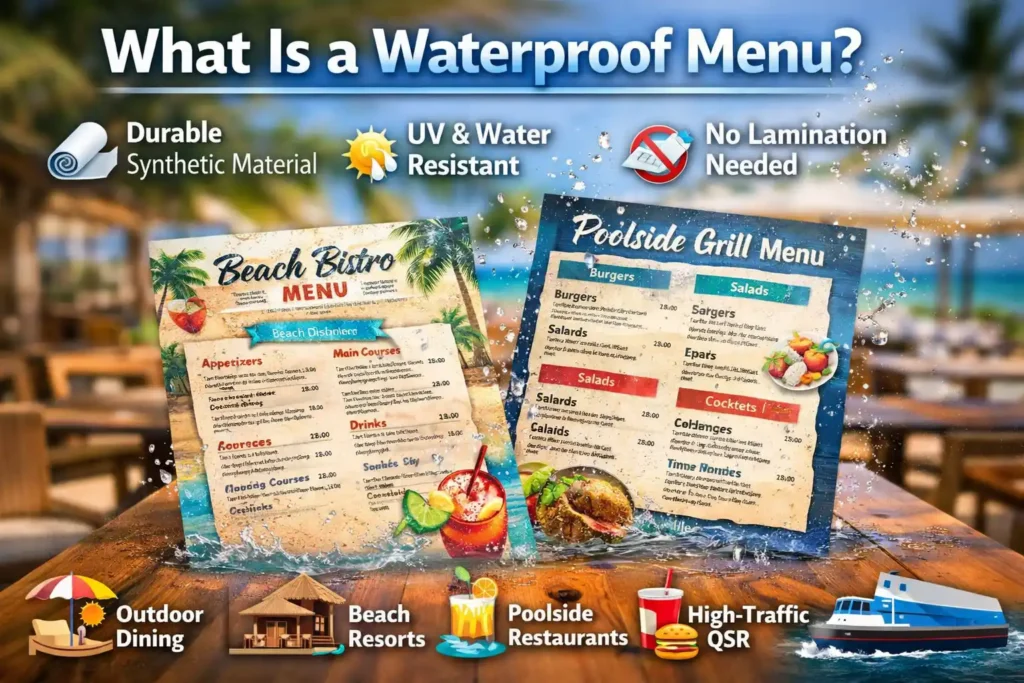
A waterproof menu is printed directly onto synthetic, non-porous materials such as PVC, polyester, or polypropylene that resist water absorption.
Unlike laminated menus, waterproof menus are not paper-based. The material itself is water-resistant.
How Waterproof Menus Are Made?
- Design printed directly on a synthetic sheet.
- UV-cured or specialty inks used.
- No layered sealing required.
- Cut and finish with rounded edges.
Key Characteristics
- Fully water-resistant
- No peeling layers
- More durable in outdoor settings
- Slightly higher initial cost
Waterproof menus are ideal for:
- Outdoor dining areas
- Beach resorts
- Poolside restaurants
- High-traffic QSR chains
When importing synthetic substrates from overseas manufacturers, logistics and compliance become critical. Global Shipping ensures secure freight handling of bulk printed materials, while Importer of Record protects restaurants from customs penalties and documentation errors when sourcing menu materials internationally.
Waterproof menus offer superior durability and moisture resistance, especially in high-exposure environments.
Laminated vs Waterproof Menus, Material Comparison Table
| Feature | Laminated Menu | Waterproof Menu |
| Base Material | Paper + Plastic Film | Synthetic PVC/Polyester |
| Water Resistance | Surface-level only | Fully water-resistant |
| Peeling Risk | Yes (edges over time) | No layered peeling |
| Cost | Lower upfront | Higher upfront |
| Lifespan | Moderate | Longer |
| Best For | Indoor cafes | Outdoor & high-traffic restaurants |
Which Option Is More Hygienic?
Waterproof menus are generally more hygienic because they resist moisture absorption and withstand stronger disinfectants.
After global hygiene awareness increased post-pandemic, many restaurants shifted toward fully waterproof synthetic menus to withstand repeated sanitization cycles.
Restaurants sourcing bulk menu materials internationally often combine Wholesale Trading with Import-Export Services to reduce material costs while ensuring customs compliance and consistent supply.
What Are the Pros and Cons of Laminated Menus?
Laminated menus are affordable and visually appealing but may peel, bubble, or warp under heavy cleaning and high humidity conditions.
Advantages of Laminated Menus
- Lower Initial Cost
Ideal for restaurants updating seasonal menus frequently. - Glossy Brand Presentation
Lamination enhances color vibrancy and sharpness. - Quick Production Turnaround
Paper-based printing is faster and widely available. - Easy Surface Cleaning
Light spills can be wiped off quickly.
For businesses scaling menu production internationally, OEM Manufacturing enables customization of lamination thickness, matte vs gloss finish, and reinforced edge sealing, reducing peeling risks significantly.
Disadvantages of Laminated Menus
- Edge Peeling Over Time
Heat-sealed edges weaken with repeated use. - Moisture Penetration Risk
Once lamination separates, paper absorbs liquid. - Limited Lifespan in Outdoor Settings
UV and humidity accelerate degradation. - Chemical Sensitivity
Harsh disinfectants can cause bubbling.
Restaurants importing laminated materials should work with Product Sourcing specialists to identify higher-grade lamination films rather than low-cost variants that fail quickly.
Laminated menus are budget-friendly and visually sharp but may not withstand heavy sanitization or outdoor conditions long-term.
What Are the Pros and Cons of Waterproof Menus?
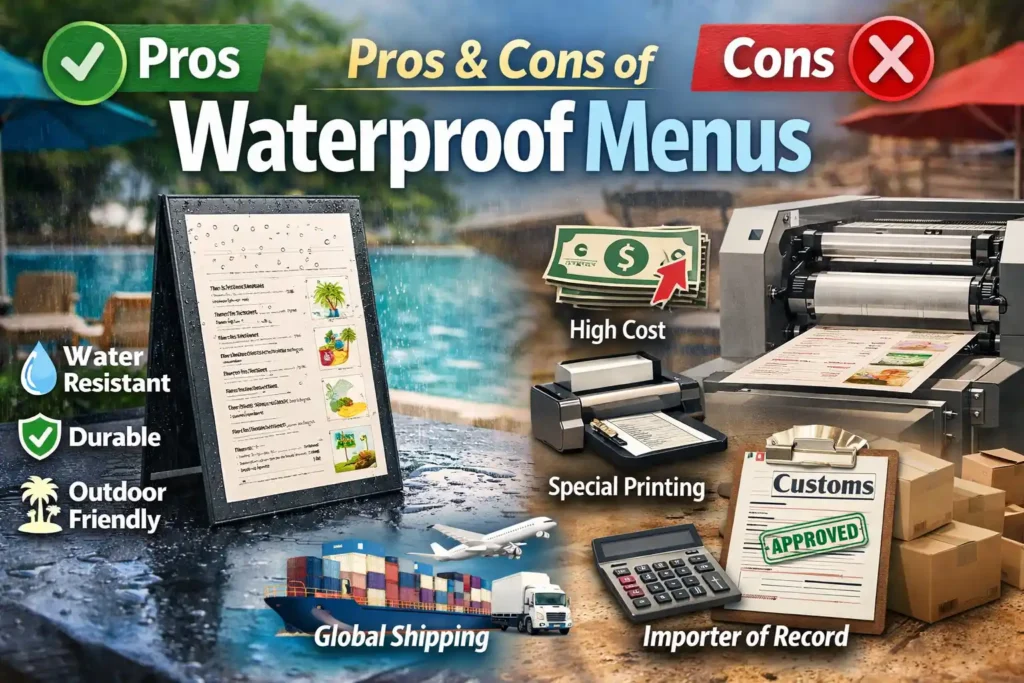
Waterproof menus offer superior durability and hygiene but require higher upfront investment and specialized printing processes.
Advantages of Waterproof Menus
- True Water Resistance
No layered paper core means no absorption. - High Durability
Resistant to bending, tearing, and edge damage. - Stronger Chemical Resistance
Withstands alcohol-based disinfectants. - Outdoor & Poolside Friendly
UV-resistant synthetic materials last longer. - Long-Term Cost Efficiency
Fewer replacements offset higher initial price.
For restaurants importing synthetic PVC or polyester sheets, Global Shipping ensures safe bulk transportation, preventing bending or surface damage during freight.
Additionally, Importer of Record protects restaurant chains from customs documentation errors when importing menu materials internationally.
Disadvantages of Waterproof Menus
- Higher Initial Cost
Material and ink costs are higher than paper. - Limited Local Printing Options
Not all printers handle synthetic substrates. - Heavier Material Weight
Slightly thicker feel compared to laminated sheets.
Waterproof menus are ideal for high-traffic, outdoor, or hygiene-sensitive environments but require larger upfront investment.
Which Menu Lasts Longer?
Waterproof menus generally last longer than laminated menus because they lack layered construction that can peel or trap moisture.
Durability Comparison
| Factor | Laminated Menu | Waterproof Menu |
| Daily Handling | Moderate | High |
| Cleaning Frequency | Limited | Very High |
| Outdoor Exposure | Low | High |
| Edge Damage Risk | Yes | Minimal |
| Average Replacement Cycle | 3–6 months | 9–18 months |
If restaurants operate multiple locations globally, consistency in material supply becomes critical. Using Wholesale Trading enables bulk procurement of standardized materials, ensuring uniform quality across branches.
Meanwhile, Import-Export Services streamline logistics paperwork, reducing supply chain disruption, especially important for hospitality brands scaling internationally.
Waterproof menus typically outlast laminated menus 2–3x in high-usage environments.
Do Waterproof Menus Cost More?
Yes, waterproof menus cost more initially, but they often reduce long-term replacement and maintenance expenses.
Cost Breakdown Considerations
Laminated Menu Costs
- Lower printing expense
- More frequent reorders
- Potential lamination repair issues
Waterproof Menu Costs
- Higher substrate cost
- Longer lifespan
- Reduced replacement frequency
When evaluating menu material comparison, restaurants must consider total lifecycle cost, not just print price. Restaurants sourcing materials globally can reduce per-unit cost by combining:
- OEM Manufacturing for direct factory production
- Wholesale Trading for volume discounts
- Global Shipping for freight optimization
This structured sourcing approach can significantly narrow the cost gap between laminated vs waterproof menus.
Which Menu Is Best for Different Restaurant Types?
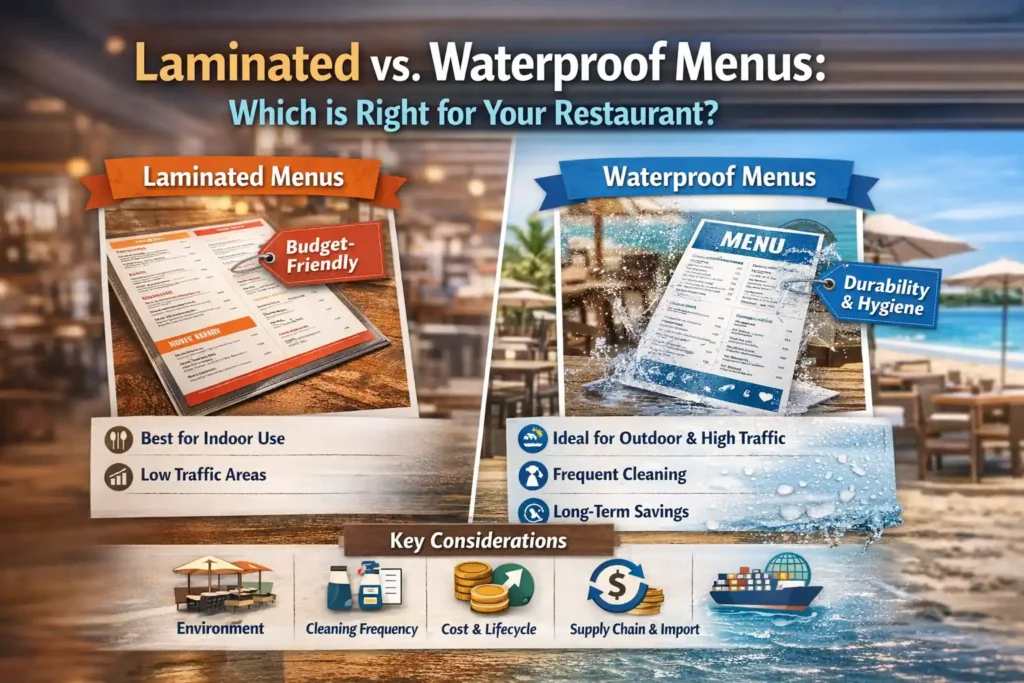
The best menu depends on the environment, traffic volume, hygiene standards, and budget. Indoor cafes may prefer laminated menus, while outdoor or high-traffic venues benefit from waterproof options.
Best Fit Scenarios
| Restaurant Type | Recommended Option |
| Small Indoor Café | Laminated |
| Fine Dining Indoor | Laminated (Premium Finish) |
| Fast Food Chain | Waterproof |
| Outdoor Patio Dining | Waterproof |
| Beach/Poolside Restaurant | Waterproof |
| Seasonal Pop-Up | Laminated |
Behavioral Insight
If your brand promises premium durability and reliability, waterproof menus reinforce that positioning. If your strategy focuses on frequent seasonal updates and lower upfront investment, laminated menus may align better.
How Do You Choose Between Laminated and Waterproof Menus?
To choose between laminated and waterproof menus, evaluate your restaurant’s environment, cleaning frequency, customer volume, budget, and brand positioning. Indoor, low-traffic spaces may benefit from laminated menus, while high-traffic or outdoor venues typically require durable waterproof materials.
If you’re still unsure, follow this structured decision framework.
Step-by-Step Menu Material Selection Guide
Step 1: Assess Your Environment
Outdoor exposure and high humidity strongly favor waterproof menus over laminated ones.
- Outdoor patios
- Poolside dining
- Beach restaurants
- Tropical climates
Waterproof synthetic substrates resist moisture and UV damage significantly better.
Step 2: Evaluate Cleaning Frequency
If menus are sanitized multiple times daily, waterproof materials perform better under alcohol-based disinfectants. Heavy sanitization weakens laminated edges over time. Waterproof menus withstand:
- Frequent chemical wipes
- Steam cleaning
- Spill-heavy environments
Step 3: Calculate Lifecycle Cost (Not Just Print Price)
Waterproof menus often cost more upfront but reduce replacement frequency, lowering long-term operational expenses. Instead of comparing printing cost alone, consider:
- Replacement cycle
- Freight cost
- Customs handling
- Bulk production savings
Restaurants importing menu materials internationally benefit from structured supply chain solutions.
Through OEM Manufacturing, brands can customize material thickness and durability directly at factory level, reducing defects and repeat orders.
Meanwhile, Wholesale Trading enables volume procurement at negotiated pricing, lowering per-unit costs for multi-location restaurant chains.
Step 4: Consider Supply Chain Stability
If your menu materials are sourced overseas, logistics complexity increases.
- Freight handling
- Customs clearance
- Regulatory compliance
- Delivery timelines
Global Shipping ensures menu materials arrive safely and on time.
Importer of Record protects restaurants from customs penalties and documentation risks when importing printed substrates or synthetic materials.
For full cross-border coordination, Import-Export Services streamline paperwork and compliance, reducing delays that could disrupt restaurant operations.
Choose laminated menus for low-budget, indoor use. Choose waterproof menus for durability, hygiene, and long-term cost efficiency. International sourcing requires structured logistics and compliance management.
How Do You Maintain Laminated and Waterproof Menus?
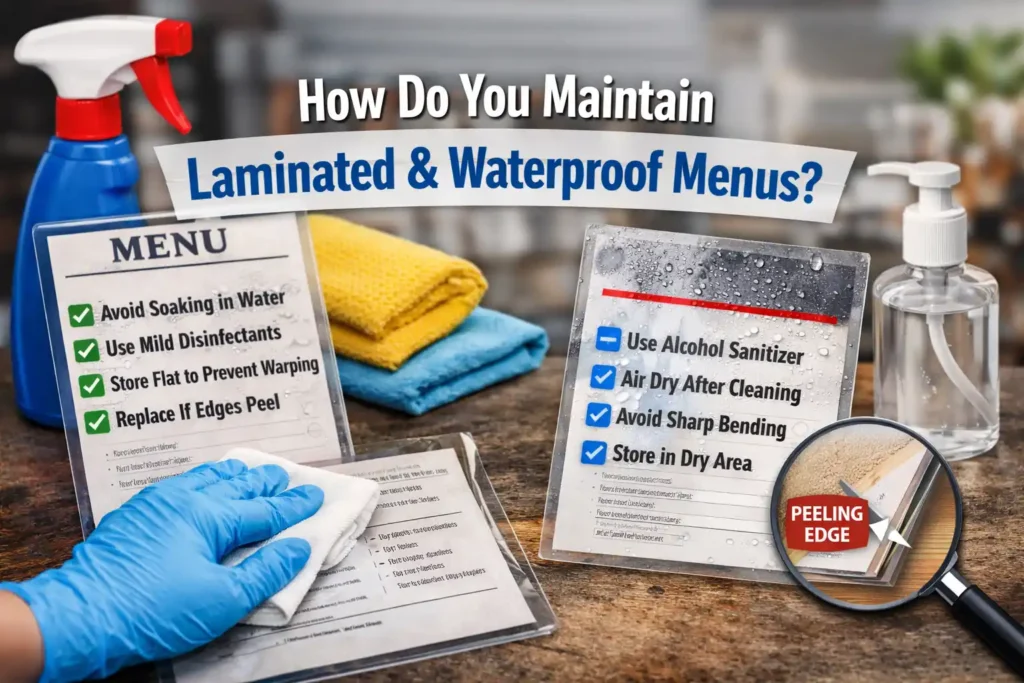
Proper maintenance extends menu lifespan by preventing edge damage, moisture penetration, and print fading.
Laminated Menu Care Tips
- Avoid soaking in water
- Use mild disinfectants
- Store flat to prevent warping
- Replace immediately if edges peel
Waterproof Menu Care Tips
- Use alcohol-based sanitizers safely
- Air dry after heavy cleaning
- Avoid sharp edge bending
- Store in dry environment
Waterproof menus tolerate stronger cleaning cycles, making them ideal for hygiene-focused operations.
Final Takeaway
Here’s what matters most: If your restaurant:
- Operates indoors
- Updates menus seasonally
- Prioritizes low upfront cost
→ Laminated menus may work.
If your restaurant:
- Has outdoor seating
- Handles heavy customer traffic
- Requires frequent sanitization
- Wants long-term durability
→ Waterproof menus are the smarter investment.
The bottom line is simple:
Waterproof menus provide better long-term value, especially for scaling restaurant brands.
FAQs
1. Are laminated menus waterproof?
No. Laminated menus are water-resistant on the surface but contain a paper core that can absorb moisture if edges peel.
2. Do waterproof menus last longer?
Yes. Waterproof menus typically last 2–3 times longer in high-traffic or outdoor environments.
3. Which menu is more hygienic?
Waterproof menus are generally more hygienic because they resist moisture absorption and withstand stronger disinfectants.
4. Are waterproof menus worth the cost?
For high-volume restaurants, waterproof menus reduce replacement frequency, making them cost-efficient long term.
5. Can laminated menus be used outdoors?
They can be used temporarily but degrade faster under humidity and UV exposure.
6. How do I import menu materials internationally?
You need structured sourcing, freight management, and customs compliance solutions such as:
- Product Sourcing
- Global Shipping
- Importer of Record
7. What is the best menu material for fast food chains?
Waterproof synthetic menus perform best due to heavy handling and frequent cleaning cycles.